

Have you noticed ice forming on your air conditioner, weak airflow coming from your vents, or your home getting warmer even though the AC is running? A frozen air conditioner can be frustrating, especially during the warmer summer months in Salem, Oregon. While ice buildup might seem unusual for a cooling system, it’s a common warning sign that something isn’t working correctly.
If your air conditioner keeps freezing up in Salem, OR, the problem could involve a dirty air filter, restricted airflow, low refrigerant, a malfunctioning blower motor, or a dirty evaporator coil. Identifying the cause early can help prevent unnecessary strain on your cooling system and reduce the risk of more expensive repairs.
Understanding why your AC unit freezes up and knowing when to call a professional for air conditioning repair in Salem, Oregon, can help protect your equipment and restore reliable cooling.
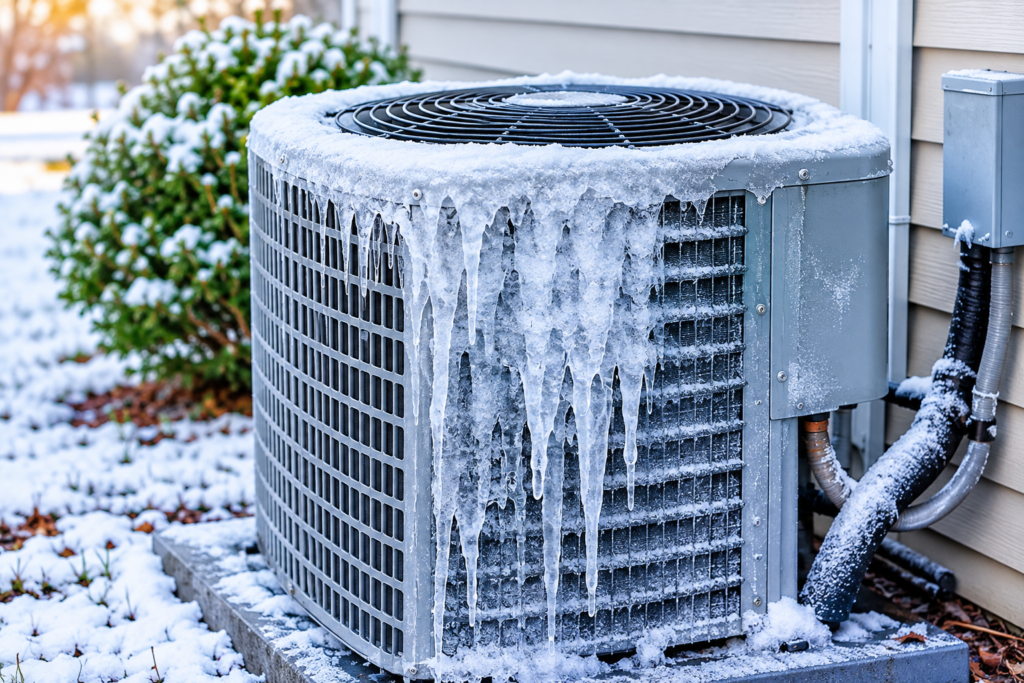
Why Does an Air Conditioner Freeze Up?
An air conditioner works by absorbing heat from the air inside your home and transferring that heat outdoors. Inside your system, the evaporator coil contains refrigerant that absorbs heat as indoor air passes across the coil.
Under normal operating conditions, the coil becomes cold enough to cool the air without developing significant ice buildup.
However, when airflow is restricted or refrigerant conditions are abnormal, the evaporator coil’s surface temperature can fall below freezing.
Moisture from the surrounding air then freezes on the coil, creating a layer of ice that interferes with the cooling process.
As the ice builds up, your air conditioner may struggle to circulate air, maintain comfortable indoor temperatures, and operate efficiently.
For homeowners experiencing a frozen AC unit in Salem, OR, identifying the underlying problem is important because simply allowing the ice to melt may not prevent the issue from returning.
1. Dirty Air Filters Restricting Airflow
One of the most common reasons an air conditioner freezes is a clogged or dirty air filter.
Your HVAC system relies on a steady supply of indoor air passing across the evaporator coil. When an air filter becomes clogged with dust, pet hair, and other debris, airflow may decrease significantly.
Without enough warm air moving across the coil, its temperature can drop below freezing and cause condensation to turn into ice.
Signs Your AC Filter May Be Causing Problems
Common symptoms include:
- Weak airflow from supply vents.
- Ice forming on refrigerant lines.
- Longer cooling cycles.
- Rooms that aren’t cooling properly.
- Higher energy consumption.
- Visible dust and debris on the air filter.
How to Fix a Dirty Air Filter
Turn off the cooling system and inspect the air filter according to the manufacturer’s instructions.
If the filter is dirty, replace it with a compatible filter or clean it if the system uses a reusable design.
Filter replacement frequency depends on the equipment, filter type, household conditions, and manufacturer’s recommendations.
If your AC keeps freezing up in Salem, Oregon, even after replacing a dirty filter, another airflow or mechanical problem may be responsible.
2. Low Refrigerant Levels or Refrigerant Leaks
Another potential cause of a frozen air conditioner is insufficient refrigerant.
Refrigerant circulates through your cooling system, absorbing heat indoors and releasing it outdoors.
When the refrigerant charge is too low, pressure and temperature conditions inside the evaporator coil can change, potentially allowing the coil to become cold enough for ice to form.
Signs Your Air Conditioner May Have a Refrigerant Problem
You may notice:
- Ice forming on the evaporator coil.
- Frost accumulating on refrigerant lines.
- Your AC running continuously without cooling effectively.
- Unusually long cooling cycles.
- Reduced cooling performance.
- Repeated freezing after the system has thawed.
A properly functioning air conditioning system does not normally consume refrigerant during operation.
Low refrigerant may indicate a leak, an improper initial charge, or another problem requiring professional diagnosis.
Why Professional Refrigerant Repair Is Important
Refrigerant systems contain pressurized components and require specialized tools and training.
Adding refrigerant without locating the underlying cause may provide only temporary relief and can result in incorrect system operation.
For homeowners needing AC refrigerant leak detection or air conditioner repair in Salem, OR, a qualified HVAC technician can evaluate system pressures, inspect for leaks, and determine whether repairs are necessary.
3. Dirty or Clogged Evaporator Coils
The evaporator coil plays a critical role in removing heat from your home’s indoor air.
Over time, dust, dirt, and debris can accumulate on coil surfaces, particularly when filtration or airflow problems have occurred.
A dirty evaporator coil can restrict airflow and interfere with proper heat transfer.
When these conditions become severe, the coil may freeze and reduce the cooling system’s effectiveness.
Warning Signs of a Dirty Evaporator Coil
Common symptoms include:
- Ice buildup near the indoor air handler.
- Reduced airflow.
- Poor cooling performance.
- Increased energy consumption.
- Water collecting near the indoor unit after thawing.
- Repeated freezing during normal operation.
Professional AC evaporator coil cleaning in Salem, Oregon, may be necessary when buildup cannot be addressed through routine filter maintenance.
Because evaporator coils are often located inside enclosed HVAC equipment, homeowners should avoid dismantling the system or attempting aggressive cleaning without appropriate training.
4. Blocked Air Vents and Restricted Ductwork
Your air conditioner needs proper airflow throughout the entire HVAC system.
Closing too many supply registers, blocking return vents, or operating with severely restricted ductwork can reduce the air moving across the evaporator coil.
This may create conditions that contribute to freezing.
Common Airflow Restrictions
Potential causes include:
- Furniture blocking return air vents.
- Closed or obstructed supply registers.
- Dirty air filters.
- Crushed or disconnected ductwork.
- Excessive duct restrictions.
- Improperly sized or installed duct systems.
In Salem homes with central air conditioning, these restrictions may cause uneven cooling, weak airflow, or recurring evaporator coil problems.
How to Improve AC Airflow
Make sure accessible vents and registers are unobstructed, and avoid closing large numbers of supply registers unless your system is specifically designed for that operation.
If airflow remains weak, professional HVAC airflow testing and AC repair in Salem, OR, can help determine whether ductwork, equipment, or another component is restricting circulation.
5. A Malfunctioning Blower Motor or Fan
Your indoor blower motor moves air through the HVAC system and across the evaporator coil.
If the blower motor stops working, operates at an incorrect speed, or experiences mechanical problems, airflow may become insufficient.
Without adequate airflow, the evaporator coil may freeze even when the refrigerant system is otherwise operating normally.
Signs of a Blower Motor Problem
You may notice:
- Little or no air coming from vents.
- Unusual humming or rattling sounds.
- Intermittent airflow.
- An AC system that runs without cooling the house.
- Ice forming shortly after cooling begins.
- A blower that fails to operate consistently.
Blower motor problems can involve electrical components, motor wear, controls, or other mechanical failures.
A professional technician can evaluate the blower assembly and determine whether adjustment, electrical repair, or component replacement is necessary.
If your air conditioner runs but barely blows air in Salem, WA, turn off cooling and arrange an HVAC inspection.
6. Thermostat Settings and Cooling System Controls
Thermostat settings and control problems can sometimes contribute to air conditioner freezing.
For example, certain operating conditions involving extended cooling cycles, improper fan operation, or abnormal system control behavior may increase the likelihood of freezing when another underlying problem is present.
A thermostat malfunction can also affect whether the cooling equipment cycles as intended.
What to Check
Before scheduling professional HVAC service, confirm that:
- Your thermostat is set to the correct operating mode.
- The temperature setting is reasonable.
- The indoor fan is operating when cooling is requested.
- The thermostat is responding properly.
- There are no obvious error messages.
Setting your thermostat much lower than the current indoor temperature does not make a properly functioning air conditioner cool the home faster.
If your system repeatedly freezes despite normal thermostat settings, professional air conditioning troubleshooting in Salem, OR, may be necessary.
7. Running Your AC During Cool Outdoor Temperatures
Although Salem experiences warm summers, spring and fall evenings can be considerably cooler.
Certain residential air conditioners are not designed to operate in cooling mode when outdoor temperatures fall below their specified operating range.
Under these conditions, refrigerant pressures and temperatures may move outside the intended operating range, increasing the risk of freezing.
This is especially relevant when homeowners operate their cooling equipment during unusually cool evenings or overnight periods.
The appropriate outdoor temperature range depends on the air conditioning model and whether the system includes approved low-ambient cooling controls.
If your AC freezes during cooler weather in Salem, Oregon, consult the manufacturer’s operating guidance and have a qualified HVAC technician evaluate the system if the problem continues.
Signs Your Air Conditioner Is Freezing Up
Sometimes the evaporator coil is hidden inside the indoor HVAC equipment, making ice buildup difficult to see.
However, several symptoms may indicate that your cooling system is freezing.
Common Signs of a Frozen AC Unit
- Ice on Refrigerant Lines: Visible frost or ice may develop on tubing near the indoor or outdoor equipment.
- Weak Airflow: Ice buildup can restrict air moving through the coil.
- Warm Air From Vents: Your cooling system may run without adequately reducing indoor temperatures.
- Water Around the Indoor Unit: Melting ice may produce more condensate than the drainage system can handle.
- Long Cooling Cycles: The air conditioner may run continuously without reaching the thermostat setting.
- Unusual System Behavior: Cooling performance may decline gradually as ice accumulates.
If you notice these symptoms, avoid continuing to operate the cooling system until the cause has been investigated.
What Should You Do If Your Air Conditioner Freezes Up?
If you discover ice on your air conditioner, taking the correct steps can help prevent additional equipment damage.
Step 1: Turn Off the Cooling System
Switch the thermostat from COOL to OFF.
Continuing to operate a frozen air conditioner can put additional strain on the compressor and other components.
Allow the system to thaw naturally before attempting to restart cooling.
Step 2: Check the Air Filter
Inspect your HVAC air filter and replace it if necessary.
A severely clogged filter may be responsible for the freezing problem.
Step 3: Check Accessible Air Vents
Make sure supply registers and return vents are not blocked by furniture, rugs, or other objects.
Avoid attempting to open sealed HVAC cabinets or access electrical components.
Step 4: Allow the Ice to Melt Naturally
Depending on the amount of ice, thawing may take several hours or longer.
Some systems can use the indoor fan to assist thawing when cooling is switched off, provided the blower is functioning and the drainage system can safely handle the water.
Do not chip ice away, apply direct heat, or pour hot water on frozen coils.
Step 5: Watch for Water Leakage
As the ice melts, water may collect in the condensate drain pan.
If significant water is escaping onto floors, ceilings, or surrounding building materials, shut the system down and arrange professional service.
Step 6: Contact an HVAC Technician if the Problem Returns
If your air conditioner freezes again, continues blowing warm air, or produces insufficient airflow, the underlying cause needs professional attention.
A qualified technician can evaluate the system and recommend appropriate repairs.
Can a Frozen Air Conditioner Damage Your HVAC System?
Yes. Continuing to run an air conditioner with a frozen evaporator coil can contribute to mechanical damage.
As ice accumulates, airflow and heat transfer become restricted.
The system may operate for extended periods without providing adequate cooling, creating additional stress on important components.
Potential consequences include:
- Reduced cooling efficiency.
- Increased electricity consumption.
- Compressor damage.
- Water damage from melting ice.
- Repeated HVAC breakdowns.
- Premature component wear.
Although a frozen air conditioner does not automatically mean major damage has occurred, repeated freezing should not be ignored.
Professional frozen air conditioner repair in Salem, Oregon, can help identify the cause before the problem becomes more expensive.
How Much Does It Cost to Repair a Frozen Air Conditioner in Salem, OR?
The cost of AC freezing repair in Salem, Oregon, depends on the underlying issue, the condition of the equipment, and the parts or labor required.
Some problems may involve straightforward maintenance, such as replacing a clogged air filter.
Others may require more extensive repairs involving:
- Refrigerant leak detection and repair.
- Evaporator coil cleaning or replacement.
- Blower motor repair.
- Electrical troubleshooting.
- Thermostat replacement.
- Airflow or ductwork corrections.
- Compressor or other mechanical repairs.
Because multiple problems can produce similar symptoms, an accurate diagnosis is important before estimating the cost of repairs.
A professional air conditioner repair technician in Salem, OR, can inspect the system and explain the recommended work.
How to Prevent Your Air Conditioner From Freezing Up
Regular HVAC maintenance can help reduce the likelihood of frozen evaporator coils and other cooling system problems.
Replace Air Filters as Recommended
Inspect filters regularly and follow the manufacturer’s replacement schedule.
Homes with pets, heavy dust, or extended HVAC use may need more frequent filter changes.
Keep Air Vents Clear
Maintain unobstructed supply and return airflow throughout the home.
Schedule Seasonal AC Maintenance
Professional air conditioning maintenance can include coil inspections, electrical checks, refrigerant performance evaluation, and blower operation testing.
Address Unusual Cooling Problems Early
Weak airflow, unusually long cooling cycles, and repeated ice buildup should be investigated before the problem worsens.
Maintain the Outdoor Unit
Keep vegetation, leaves, and other debris from obstructing the outdoor condenser unit, following the manufacturer’s clearance requirements.
Follow Manufacturer Operating Guidelines
Avoid operating the system outside its intended temperature range.
For Salem homeowners, scheduling professional air conditioner maintenance before summer can help identify developing problems before cooling demand increases.
When Should You Call a Professional for Frozen AC Repair in Salem?
Some freezing problems may be related to routine maintenance, but others require specialized HVAC testing and repair.
Contact a qualified AC repair company in Salem, OR, when:
- Your air conditioner freezes repeatedly.
- Ice returns shortly after thawing.
- Your AC runs but doesn’t cool properly.
- Refrigerant lines repeatedly develop frost.
- The blower motor isn’t working correctly.
- Water is leaking around the indoor equipment.
- You suspect a refrigerant leak.
- The evaporator coil appears heavily contaminated.
- Your system makes unusual noises or develops electrical problems.
Refrigerant handling, electrical repairs, and internal HVAC component testing should be left to appropriately qualified professionals.
Why Professional AC Repair Matters for Salem Homeowners
A reliable air conditioning system is important for maintaining indoor comfort during Salem’s warmer summer months.
When your cooling system repeatedly freezes, the problem may involve several interacting components rather than a single obvious failure.
Professional HVAC repair services in Salem, Oregon, can help identify whether the cause involves restricted airflow, refrigerant charge, mechanical problems, or equipment controls.
An HVAC technician can evaluate system operation, recommend appropriate repairs, and identify maintenance concerns that could contribute to future breakdowns.
Whether you’re dealing with a frozen evaporator coil, weak airflow, or an air conditioner that runs without cooling, addressing the underlying cause is the best way to restore dependable performance.
Schedule Professional Air Conditioner Repair in Salem, OR
A frozen air conditioner is more than an inconvenience. It can indicate restricted airflow, a refrigerant problem, or a malfunctioning HVAC component that needs attention.
If your AC keeps freezing up in Salem, Oregon, don’t ignore the warning signs or continue operating a system covered in ice.
Professional air conditioner repair, frozen evaporator coil troubleshooting, refrigerant leak detection, blower motor repair, and HVAC maintenance in Salem, OR, can help identify the underlying problem and restore reliable cooling.
Experiencing a frozen AC unit in Salem? Contact a qualified local HVAC company to schedule an air conditioning inspection and discuss the repairs needed to get your cooling system operating properly again.
Frequently Asked Questions About Frozen Air Conditioners in Salem, OR
If your air conditioner continues freezing with a clean filter, the problem may involve a dirty evaporator coil, restricted ductwork, insufficient blower airflow, refrigerant problems, or equipment controls. A clean filter does not guarantee that adequate air is moving across the evaporator coil. If you’re experiencing recurring AC freezing problems in Salem, Oregon, a qualified HVAC technician can evaluate airflow, refrigerant performance, and system components to identify the cause.
Yes. Low refrigerant charge can cause abnormal pressure and temperature conditions that allow moisture to freeze on the evaporator coil. Low charge may result from a leak or an improperly charged system. Homeowners needing AC refrigerant leak repair in Salem, OR, should contact a qualified HVAC professional rather than attempting to add refrigerant themselves. Proper diagnosis is important because ice buildup can also result from airflow restrictions and mechanical problems.
A frozen air conditioner may take several hours to thaw completely, depending on the amount of ice, indoor temperature, and equipment conditions. Turn off cooling and allow the ice to melt naturally. Some systems can use the fan-only setting to assist thawing, provided the fan and condensate drainage are functioning correctly. If the air conditioner keeps freezing in Salem, WA, schedule professional service to identify the underlying problem rather than repeatedly restarting the equipment.
Yes. If you notice ice on the evaporator coil or refrigerant lines, turn off the cooling system. Continuing to run frozen equipment can reduce cooling performance and potentially damage important components. Check the air filter and accessible vents while allowing the system to thaw naturally. If freezing returns, professional frozen AC repair in Salem, Oregon, can help identify whether the problem involves airflow, refrigerant, or equipment malfunction.
If your air conditioner repeatedly freezes, isn’t cooling properly, or develops ice on its refrigerant lines, contact a qualified HVAC repair technician serving Salem, Oregon. Professional technicians can inspect the evaporator coil, check airflow, evaluate blower operation, and diagnose refrigerant-related concerns. Timely air conditioning repair in Salem, OR, can help restore cooling performance and prevent additional strain on the system.