

Choosing the right air conditioner for your home is one of the most important decisions you can make for your comfort, energy efficiency, and monthly utility bills. Many homeowners assume that a larger air conditioner will cool their home better, but an oversized system can actually create just as many problems as one that’s too small.
If you’re considering a new AC installation or air conditioner replacement in Salem, understanding how HVAC professionals determine the proper system size can help you make an informed decision. A properly sized air conditioner will keep your home comfortable during Salem’s warm summers while operating efficiently for years to come.
Why Air Conditioner Size Matters
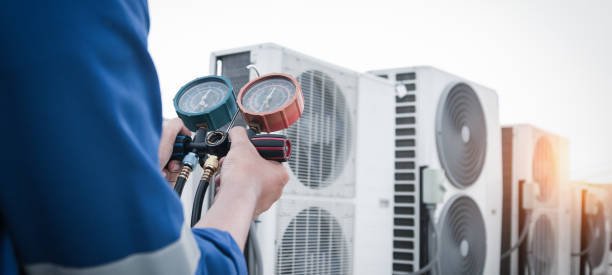
Air conditioner size is measured in BTUs (British Thermal Units) and tons of cooling capacity, not by the physical dimensions of the unit itself.
For reference:
- 1 ton = 12,000 BTUs
- 2 tons = 24,000 BTUs
- 3 tons = 36,000 BTUs
- 4 tons = 48,000 BTUs
- 5 tons = 60,000 BTUs
The goal is to match your cooling system to your home’s actual cooling load. When an AC system is properly sized, it maintains consistent indoor temperatures, controls humidity, and operates efficiently.
If you’re working with an experienced HVAC contractor in Salem, they should calculate your home’s cooling needs rather than simply replacing your old system with the same size.
What Happens If Your AC Is Too Small?
An undersized air conditioner struggles to cool the home during hot weather.
Common problems include:
- Constant operation
- Uneven temperatures
- High electricity bills
- Increased equipment wear
- Difficulty keeping up during heat waves
Even though the unit runs continuously, your home may never reach the desired thermostat setting.
What Happens If Your AC Is Too Large?
Many homeowners believe bigger is better, but oversized air conditioners create their own problems.
A system that’s too large will:
- Turn on and off frequently (short cycling)
- Remove less humidity
- Create uneven temperatures
- Wear out faster
- Increase repair costs
- Waste energy
In Salem, where summer temperatures can vary throughout the day, proper humidity control is just as important as cooling. An oversized unit often cools the air so quickly that it doesn’t run long enough to remove excess moisture, leaving your home feeling cool but damp.
Factors That Determine the Right AC Size
Professional HVAC technicians consider much more than square footage when determining the correct system size.
A proper Manual J load calculation evaluates several factors, including:
Home Size
Square footage provides a starting point, but it isn’t enough to accurately size an air conditioner.
Ceiling Height
Homes with vaulted or higher ceilings require more cooling capacity than homes with standard 8-foot ceilings.
Insulation
Well-insulated homes retain cool air more effectively, reducing the amount of cooling required.
Windows
Large windows, especially those facing south or west, increase heat gain during the summer.
Technicians evaluate:
- Number of windows
- Window size
- Window type
- Energy efficiency
- Sun exposure
Home Orientation
The direction your home faces affects how much sunlight enters throughout the day.
Occupancy
Homes with more occupants naturally generate additional indoor heat.
Appliances and Electronics
Kitchen appliances, computers, televisions, and lighting all contribute to indoor heat gain.
Air Leakage
Older homes with poor sealing often require additional cooling capacity due to conditioned air escaping outdoors.
Why Salem's Climate Matters
Salem experiences warm, dry summers with periods of temperatures reaching the 90s and occasionally exceeding 100°F during heat waves. At the same time, spring and fall temperatures can fluctuate significantly.
Because of these changing conditions, homeowners benefit from systems that are properly sized for the local climate rather than oversized “just in case.”
A qualified HVAC company in Salem understands the region’s weather patterns and can recommend equipment that provides reliable comfort without excessive energy consumption.
Typical AC Sizes by Home
While every home should receive a professional load calculation, many residential properties fall within these general ranges:
- 1,000–1,200 sq. ft.: 2-ton system
- 1,200–1,600 sq. ft.: 2.5-ton system
- 1,600–2,000 sq. ft.: 3-ton system
- 2,000–2,500 sq. ft.: 3.5–4-ton system
- 2,500–3,200 sq. ft.: 4–5-ton system
These are only estimates. Factors like insulation, windows, ceiling height, and home design can significantly change the recommended system size.
Should You Replace Your Furnace at the Same Time?
If your furnace is nearing the end of its lifespan, replacing both systems together often improves efficiency and compatibility.
Many homeowners choosing AC replacement in Salem also install a matching high-efficiency furnace or heat pump to maximize performance and qualify for available manufacturer warranties.
Signs Your Current AC May Be the Wrong Size
If your existing system exhibits any of these symptoms, it may not be properly sized:
- Constant cycling
- Rooms that never cool evenly
- High humidity indoors
- Rising energy bills
- Frequent breakdowns
- Hot and cold spots
- AC runs continuously during warm weather
A professional inspection can determine whether improper sizing is contributing to these issues.
Professional AC Installation Makes a Difference
Even the highest-quality air conditioner won’t perform efficiently if it’s installed incorrectly.
Proper installation includes:
- Accurate load calculations
- Correct refrigerant charge
- Proper duct sizing
- Airflow balancing
- Thermostat calibration
- Electrical inspection
- Manufacturer-approved installation procedures
Working with an experienced air conditioning contractor in Salem helps ensure your new system delivers the efficiency and comfort you expect.
Trust a Local HVAC Contractor in Salem
Choosing the right air conditioner is about more than simply replacing your old unit. Proper sizing improves comfort, lowers utility bills, extends equipment life, and helps your home stay cool even during Salem’s hottest summer days.
If you’re searching for air conditioner installation in Salem, AC replacement Salem, HVAC contractor Salem, air conditioning services Salem, new AC installation Salem, or heating and cooling services in Salem, our experienced technicians can evaluate your home’s cooling needs and recommend the ideal system for your space and budget.
With a professional load calculation and expert installation, you’ll enjoy reliable comfort, improved energy efficiency, and lower cooling costs for years to come.
Frequently Asked Questions
Both cause problems. An undersized AC runs constantly, struggles to cool your home during heat waves, and drives up electricity bills. An oversized AC short cycles, turning on and off too frequently which reduces humidity control, creates uneven temperatures, increases wear, and wastes energy. The right size system maintains consistent comfort and operates efficiently.
A qualified HVAC contractor performs a Manual J load calculation that evaluates your home’s square footage, ceiling height, insulation levels, number and type of windows, sun exposure, home orientation, number of occupants, and air leakage. Square footage alone is never enough to accurately size an air conditioner.
As a general guideline: homes up to 1,200 sq. ft. typically need a 2-ton system, 1,200–1,600 sq. ft. suits a 2.5-ton system, 1,600–2,000 sq. ft. fits a 3-ton system, and larger homes up to 3,200 sq. ft. may require a 4–5-ton system. These are estimates only a professional load calculation is always recommended for accurate sizing.
If your furnace is nearing the end of its lifespan, replacing both systems together is often the smarter choice. Matching systems improve overall efficiency and compatibility, and many homeowners qualify for better manufacturer warranties when both units are installed together by a professional HVAC contractor in Salem.