

Your thermostat has a major influence on both indoor comfort and how often your heating and cooling equipment needs to run.
Setting it too high during winter or too low during summer can increase energy use and place additional demand on your HVAC system. On the other hand, choosing a temperature that is uncomfortable just to reduce your utility bill can make your home miserable.
For homeowners in Salem, Oregon, the best thermostat setting depends on your comfort preferences, HVAC system, insulation, home design, humidity, occupancy, and energy-efficiency goals.
A commonly used starting point for energy savings is around 78°F during the summer when cooling is needed and 68°F during the winter while you are home and awake. These temperatures are not strict rules. They are better viewed as starting points that homeowners can adjust based on comfort and how their home performs.
Understanding how thermostat settings affect your air conditioner, heat pump, or furnace can help you find a better balance between comfort and efficiency.
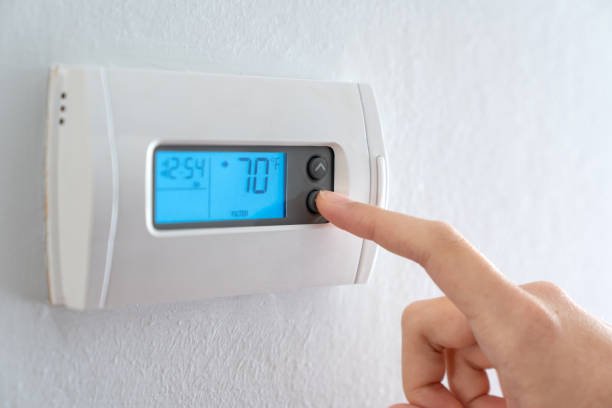
What Should You Set Your Thermostat to in Summer?
A thermostat setting around 78°F is often used as an energy-conscious starting point during warm weather.
That does not mean every Salem homeowner needs to keep their home at exactly 78 degrees.
Some people are comfortable at 78°F, while others may prefer 74°F, 72°F, or another setting. Factors such as sunlight, insulation, indoor humidity, ceiling fans, and personal preference all affect how warm a particular temperature feels.
The important concept is that the lower you set your thermostat compared with the outdoor temperature, the longer your cooling system generally needs to operate.
For example, asking your air conditioner to maintain 68°F during a hot afternoon can require substantially more cooling than maintaining 76°F.
If you are trying to improve air conditioning efficiency in Salem, consider starting at a comfortable temperature and gradually raising the setting by one degree at a time.
You may find that a slightly higher setting remains comfortable while reducing unnecessary HVAC runtime.
Salem Summers Can Still Put Your AC to Work
Salem may not experience the same extended summer heat as some parts of the country, but air conditioning is still important.
National Weather Service climate normals show that July and August average daytime highs around the low-to-mid 80s in Salem, and significantly hotter days occur periodically. July 2026 reached 100°F, while June 2026 reached 98°F.
During these hotter periods, a properly functioning cooling system may run for long stretches of the day.
Homeowners who notice their air conditioner in Salem running constantly, struggling to reach the thermostat setting, or producing unusually warm air should not automatically compensate by lowering the thermostat further.
The problem could involve the HVAC equipment itself.
Potential causes can include airflow restrictions, dirty filters, thermostat problems, refrigerant-related issues, dirty outdoor equipment, duct problems, or equipment that needs professional service.
Should You Turn the Thermostat Up When You Leave?
If the house will be empty for several hours, increasing the thermostat temperature during summer can reduce unnecessary cooling.
You generally do not need to maintain the exact same indoor temperature when nobody is home.
A programmable or smart thermostat can automatically increase the temperature during work hours and begin cooling the house before you return.
This approach can provide energy savings without requiring homeowners to constantly adjust the thermostat manually.
However, there is usually no need to shut the air conditioner completely off during very hot weather.
Your home still contains appliances, electronics, furnishings, pets, and other items that may benefit from reasonable temperature control.
Instead, consider allowing the indoor temperature to rise moderately while you are away.
What Temperature Should Your Thermostat Be in Winter?
During winter, 68°F is another commonly referenced starting point for energy-conscious heating.
Just like the summer recommendation, it is not a requirement.
Some households may be comfortable at 66°F, while others prefer 70°F or higher.
The goal is to find the lowest temperature that keeps your household comfortably warm without unnecessarily increasing heating demand.
Salem winters are generally moderate compared with colder interior climates, but freezing temperatures still occur.
For example, Salem’s January climate normals show an average daytime high around 48°F, and January 2026 reached a low of 20°F. February normals include average nighttime lows around 36°F.
When colder weather arrives, your furnace or heat pump may operate much more frequently to maintain your thermostat setting.
Should You Lower the Temperature at Night?
Many homeowners prefer a cooler bedroom while sleeping.
Lowering the thermostat a few degrees at night can also reduce the amount of heating required.
A programmable thermostat can automatically lower the temperature around bedtime and raise it before you wake up.
For example, a homeowner who maintains 68°F during the evening may choose a slightly cooler setting overnight.
The exact temperature depends on personal comfort and household needs.
Families with infants, older adults, certain medical needs, or temperature-sensitive pets may prefer more consistent indoor temperatures.
Heat Pumps Require a Slightly Different Strategy
Heat pumps are increasingly common throughout Oregon because they can provide both heating and air conditioning.
However, homeowners should understand that operating a heat pump is somewhat different from operating a traditional furnace.
Large thermostat changes during cold weather may cause some systems to use supplemental heating, depending on equipment type and controls.
That means dramatically lowering the temperature and then asking the heat pump to rapidly increase it may not always produce the savings homeowners expect.
If your home uses a heat pump in Salem, Oregon, a relatively consistent thermostat setting may work better than large temperature swings.
Your HVAC technician can also explain how your specific heat pump and thermostat are configured.
Does Turning the Thermostat Way Down Cool the House Faster?
No.
This is one of the most common thermostat misconceptions.
If your house is 80°F and you want it to reach 74°F, setting the thermostat to 65°F usually does not make a standard air conditioner cool the home faster.
The equipment generally cools at its normal operating capacity until the thermostat reaches the selected temperature.
Setting the thermostat unnecessarily low simply increases the chance that the system continues operating longer than necessary.
The same concept generally applies during winter.
Setting the thermostat to 80°F does not necessarily make a typical furnace heat the house faster than setting it to 70°F.
Choose the temperature you actually want rather than using an extreme setting.
Why Your Home May Feel Hot Even at the Right Temperature
Thermostat temperature is only one part of indoor comfort.
A house set to 74°F can still feel uncomfortable if humidity is high, airflow is poor, or certain rooms receive large amounts of direct sunlight.
Other factors may include:
- Dirty HVAC filters
- Insufficient insulation
- Air leakage around doors or windows
- Ductwork problems
- Poor airflow
- Closed or blocked vents
- Large west-facing windows
- HVAC equipment problems
- Indoor humidity
If you are continually lowering the thermostat but your house still feels uncomfortable, the issue may be something other than the thermostat setting.
A professional HVAC inspection in Salem can help determine whether the system is operating correctly.
Use Ceiling Fans to Improve Summer Comfort
Ceiling fans can help occupants feel cooler by moving air across the skin.
They do not actually reduce the temperature of the room, which means there is little benefit to leaving them running in an empty room.
When people are present, however, a ceiling fan may make a slightly warmer thermostat setting feel comfortable.
This can potentially allow homeowners to raise the thermostat while still maintaining comfort.
Just remember that the fan should complement your Salem air conditioning system, not replace it during dangerously hot conditions.
Your HVAC Filter Can Affect Comfort
A dirty air filter can restrict airflow through the heating and cooling system.
Restricted airflow may reduce comfort and force HVAC equipment to operate longer.
If your thermostat seems to be set correctly but the home is not reaching the desired temperature, checking the filter is one of the simplest troubleshooting steps.
Filter replacement frequency depends on the type of filter, household conditions, pets, system runtime, and manufacturer recommendations.
Homeowners who are unsure which filter to use can ask an HVAC professional in Salem during routine maintenance.
Smart Thermostats Can Simplify Temperature Control
Smart and programmable thermostats make it easier to adjust temperatures based on your daily schedule.
You can create different settings for:
- Morning
- Work hours
- Evening
- Overnight
- Weekends
- Vacations
Some smart thermostats can also be controlled remotely from a phone.
This can be helpful if your schedule changes unexpectedly or you forget to adjust the thermostat before leaving.
For many households, better scheduling provides more practical energy savings than constantly thinking about the thermostat throughout the day.
Avoid Constantly Changing the Thermostat
Small adjustments are normal.
Changing the temperature every few minutes is generally unnecessary.
Your HVAC system needs time to change the indoor temperature, particularly during extreme weather.
If the home is taking unusually long to cool or heat, repeatedly adjusting the thermostat usually will not solve the underlying problem.
The HVAC system may need maintenance or repair.
If you regularly notice your home struggling to reach the desired temperature, schedule heating or air conditioning service in Salem, Oregon.
Thermostat Placement Matters
The location of your thermostat can also affect system operation.
A thermostat installed near direct sunlight, a drafty exterior door, a kitchen, a supply vent, or another unusual heat source may not accurately represent the temperature throughout the home.
For example, direct afternoon sunlight could cause the thermostat to think the house is warmer than it actually is.
That may cause the air conditioner to run longer.
If certain rooms consistently feel much warmer or colder than the thermostat indicates, thermostat placement and airflow should be evaluated.
When Thermostat Problems May Actually Be HVAC Problems
Homeowners sometimes assume the thermostat is malfunctioning when the real issue is elsewhere in the HVAC system.
Warning signs can include:
- The system does not turn on
- The home never reaches the selected temperature
- The AC blows warm air
- The furnace blows cool air
- The HVAC system turns on and off frequently
- Some rooms remain significantly hotter or colder
- The thermostat screen is blank
- Energy bills suddenly increase
- The equipment makes unusual noises
If changing batteries or checking basic thermostat settings does not solve the problem, professional diagnosis may be needed.
A qualified Salem HVAC technician can inspect the thermostat, equipment, airflow, electrical components, and other parts of the system.
HVAC Maintenance Helps Your System Maintain Temperature
Even the perfect thermostat setting cannot compensate for poorly maintained equipment.
Routine HVAC maintenance helps keep heating and cooling systems operating properly.
Maintenance may include inspecting components, checking airflow, evaluating controls, cleaning appropriate equipment, and identifying developing problems before they result in a breakdown.
Scheduling HVAC maintenance in Salem before peak summer or winter weather can reduce the chance that your system fails when you need it most.
Preventive maintenance can also help ensure the equipment is operating as efficiently as its condition and design allow.
Best Thermostat Settings for Salem, Oregon
There is no single thermostat temperature that every Salem homeowner must use.
A practical starting point is:
Summer: Around 78°F when you are home and want to reduce cooling demand.
Winter: Around 68°F while you are home and awake.
From there, adjust the thermostat based on your comfort.
If 78°F feels too warm, lower it gradually. If 68°F feels too cool during winter, increase it.
Energy efficiency matters, but so does being comfortable in your own home.
The Department of Energy has specifically clarified that homeowners should choose the temperature they prefer; suggested thermostat temperatures are simply tools for people interested in greater energy savings.
Heating and Air Conditioning Services in Salem, Oregon
Salem experiences enough seasonal temperature variation that homes may require both dependable heating and cooling.
National Weather Service records show recent Salem temperatures ranging from winter lows around 20°F to summer highs reaching 100°F, demonstrating why reliable year-round HVAC performance matters.
If your system cannot maintain a reasonable thermostat setting, continually runs, makes unusual noises, or leaves rooms uncomfortable, the problem may require professional attention.
Service Pro Plumbing provides HVAC services in Salem, Oregon, including heating and cooling support for homeowners who need reliable indoor comfort.
Whether you need air conditioning service, heating repair, furnace service, heat pump service, thermostat troubleshooting, or HVAC maintenance in Salem, having the system professionally inspected can help identify the cause of poor performance.
Keep Your Salem Home Comfortable Year-Round
Your thermostat should help your HVAC system maintain a comfortable home without creating unnecessary heating or cooling demand.
For many households, approximately 78°F in summer and 68°F in winter can serve as useful starting points. Your actual settings should depend on comfort, occupancy, home construction, equipment, and personal preferences.
Programmable thermostats, routine HVAC maintenance, clean filters, good airflow, and reasonable temperature adjustments can all contribute to better system performance.
If your air conditioner cannot keep your home cool during a Salem summer or your heating system struggles when winter temperatures drop, lowering or raising the thermostat may not solve the real problem.
Contact Nelke Mechanical Heating & Cooling for heating and air conditioning service, HVAC maintenance, thermostat troubleshooting, heat pump service, furnace repair, and AC service in Salem, Oregon.
Frequently Asked Questions
Around 78°F is a common starting point for energy savings during summer. Adjust it to your comfort, humidity levels, and home conditions.
Around 68°F while you’re home and awake is a common starting point. You can adjust it based on personal comfort and your home’s heating needs.
Yes, raising the cooling setpoint while you’re away can reduce unnecessary AC runtime. A programmable or smart thermostat can make temperature adjustments automatic.
Possible causes include a dirty filter, restricted airflow, thermostat issues, ductwork problems, or equipment faults. If basic checks don’t help, schedule professional HVAC service.