

When your furnace starts making unusual noises, struggles to heat your home, or requires another expensive repair, you may face an important question: Should you repair your older furnace or replace it with a new heating system? For homeowners in Salem, Oregon, making the right decision can affect indoor comfort, heating expenses, and the reliability of your home’s HVAC equipment for years to come.
Older furnaces don’t always need immediate replacement. Some heating problems can be resolved with relatively affordable repairs, while others indicate that a furnace is approaching the end of its useful lifespan. Understanding the age, condition, efficiency, and repair history of your equipment can help you make an informed decision.
If you’re comparing furnace repair vs. furnace replacement in Salem, OR, this guide explains the warning signs to watch for, how to evaluate repair costs, and when investing in a new heating system may make more financial sense.
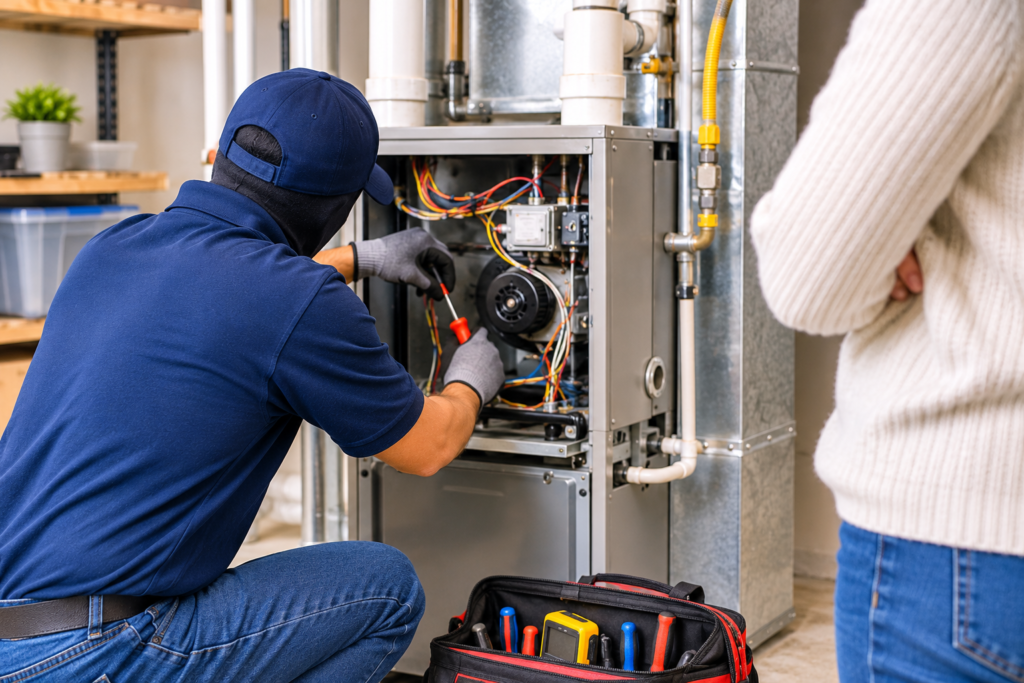
How Long Does a Furnace Typically Last?
Most residential furnaces have an expected lifespan of approximately 15 to 20 years, although actual longevity varies depending on equipment quality, installation, usage, and maintenance.
Some furnaces continue operating beyond 20 years, while others experience major mechanical problems much earlier.
Factors that affect furnace lifespan include:
- Frequency and quality of professional HVAC maintenance.
- Proper furnace installation and equipment sizing.
- Air filter replacement and airflow conditions.
- Frequency of heating cycles.
- Condition of the blower motor and heat exchanger.
- Local heating demands and thermostat settings.
- Previous repairs and overall equipment condition.
In Salem, Oregon, furnaces commonly operate throughout the cooler fall, winter, and early spring months. Reliable heating is especially important during periods of freezing weather.
The U.S. Environmental Protection Agency’s ENERGY STAR program recommends considering replacement when a furnace or boiler is more than 15 years old, particularly if it is experiencing performance problems.
However, furnace age alone does not determine whether replacement is necessary.
A well-maintained older furnace with a minor repair issue may still have useful service life remaining.
7 Signs You Should Consider Replacing Your Furnace
When deciding whether to repair or replace an older heating system, pay attention to changes in performance, reliability, and safety.
1. Your Furnace Is More Than 15 Years Old
A furnace approaching 15 to 20 years of age may be nearing the end of its expected service life.
As equipment ages, certain components can become more susceptible to failure, and replacement parts may become harder to obtain.
If your older furnace is still operating reliably, immediate replacement may not be necessary.
However, when a furnace is over 15 years old and requires expensive repairs, furnace replacement in Salem, Oregon, becomes an option worth comparing.
2. Your Furnace Needs Frequent Repairs
Occasional repairs are a normal part of maintaining heating equipment.
However, repeated service appointments can indicate that multiple components are beginning to deteriorate.
Common repair issues include:
- Faulty ignition systems.
- Failed flame sensors.
- Malfunctioning blower motors.
- Worn control boards.
- Damaged limit switches.
- Problems with inducer motors.
- Thermostat or electrical control failures.
If you’re scheduling furnace repair in Salem, OR, several times during consecutive heating seasons, compare the combined repair expenses with the cost of installing a newer system.
Repeated breakdowns can become especially inconvenient during winter when dependable heating is important.
3. Your Heating Bills Keep Increasing
An older furnace may consume more energy than newer high-efficiency equipment.
However, increasing heating bills can also result from changes in utility rates, outdoor temperatures, thermostat settings, insulation conditions, or household energy usage.
If your energy consumption continues increasing despite similar weather and heating habits, your furnace may deserve professional evaluation.
A qualified heating repair technician in Salem, Oregon, can inspect equipment operation and determine whether maintenance, repairs, or replacement may improve efficiency.
4. Your Home Has Uneven Heating
Do some rooms feel comfortable while others remain cold?
Uneven heating can result from several problems, including:
- Restricted airflow.
- Dirty air filters.
- Blower motor problems.
- Leaking or poorly insulated ductwork.
- Improperly balanced air distribution.
- Inadequate insulation.
- Incorrectly sized heating equipment.
Although uneven temperatures may indicate furnace performance problems, replacing the furnace doesn’t automatically solve ductwork or insulation issues.
Professional HVAC diagnostics in Salem, OR, can help determine whether the equipment or another part of the heating system is responsible.
5. Your Furnace Makes Unusual Noises
Most furnaces produce some sound during normal operation.
However, loud banging, rattling, grinding, or high-pitched squealing may indicate mechanical problems.
Potential causes include worn blower components, loose panels, motor problems, or other equipment issues.
Some problems can be repaired without replacing the furnace.
If loud noises are accompanied by poor performance, repeated shutdowns, or other warning signs, schedule a professional inspection.
6. Your Furnace Frequently Turns On and Off
Frequent cycling, sometimes called short cycling, occurs when a furnace repeatedly starts and stops without completing an appropriate heating cycle.
Potential causes include:
- Dirty air filters.
- Airflow restrictions.
- Overheating safety controls.
- Thermostat problems.
- Incorrect equipment sizing.
- Malfunctioning heating components.
Some short-cycling issues can be resolved through repairs or maintenance.
However, an aging furnace with repeated shutdowns may require a more comprehensive evaluation.
7. Your Furnace Has a Serious Safety Problem
Safety concerns should take priority over repair costs.
Gas furnaces produce combustion gases that must be properly vented outside the home.
A damaged heat exchanger, venting failure, or other combustion-related problem can create potentially dangerous conditions.
If a qualified technician identifies a serious safety defect, the equipment should not continue operating until the condition is properly resolved.
If you smell natural gas, leave the building immediately and contact your gas utility’s emergency service or 911 from a safe location. Do not operate electrical switches or attempt to locate the leak yourself.
If a carbon monoxide alarm activates, move everyone outside and contact emergency services.
Professional gas furnace inspection and repair in Salem, OR, can help identify combustion-related concerns and determine whether the system can be safely repaired or requires replacement.
When Does Furnace Repair Make More Sense Than Replacement?
Not every furnace problem justifies installing a new heating system.
In many cases, repairing the existing equipment is more economical.
Your Furnace Is Relatively New
If your furnace is less than 10 years old, has been properly maintained, and hasn’t experienced repeated breakdowns, repair is often worth considering.
A relatively new system may have many years of useful service remaining.
The Problem Involves a Minor Component
Certain furnace problems can be resolved through relatively straightforward repairs.
Examples include:
- Replacing a faulty flame sensor.
- Repairing certain thermostat problems.
- Replacing an accessible control component.
- Addressing airflow restrictions.
- Correcting an ignition-related malfunction.
- Repairing a minor electrical connection issue.
The appropriate repair depends on the diagnosis and whether the equipment can be returned to safe operation.
The Furnace Has a Good Maintenance History
A furnace that has received regular maintenance and has few previous problems may be a better repair candidate than one with a history of recurring failures.
The Repair Cost Is Reasonable
A minor repair may be a practical investment even for an aging furnace.
However, the older the equipment becomes, the more important it is to consider the possibility of additional future repairs.
For homeowners seeking affordable furnace repair in Salem, Oregon, a professional inspection can help identify the problem and provide a realistic comparison between repair and replacement.
When Is Furnace Replacement the Better Investment?
Replacing a furnace may make more sense when several unfavorable factors occur together.
For example, a 19-year-old furnace requiring an expensive blower motor replacement and additional repairs may be a less attractive investment than a newer furnace needing a simple ignition repair.
Consider replacement when:
- The furnace is approximately 15 to 20 years old or older.
- Repair expenses are substantial.
- Several components have failed recently.
- The system is significantly less efficient than available alternatives.
- Replacement parts are difficult to obtain.
- The furnace has unresolved safety concerns.
- Heating performance is consistently inadequate.
Professional furnace replacement services in Salem, OR, can help homeowners evaluate new equipment options based on their property’s heating requirements and budget.
Furnace Repair vs. Replacement: How to Compare the Costs
The cost of repairing an older furnace depends on the failed component, equipment accessibility, replacement parts, and labor required.
Replacing an entire furnace generally involves a greater initial investment, but it may provide longer-term reliability and improved efficiency.
Understanding the 50% Repair Rule
A common decision guideline is to consider replacement when a major furnace repair approaches 50% of the cost of installing a new system.
For example, if replacement costs $6,000 and the necessary repairs are estimated at $3,000, purchasing a new furnace may deserve serious consideration.
However, this is a guideline rather than a universal rule.
The decision should also account for equipment age, energy consumption, safety, warranties, and expected remaining lifespan.
Factors That Affect Furnace Replacement Costs
The price of furnace installation in Salem, Oregon, can vary depending on:
- Furnace type and fuel source.
- Equipment heating capacity.
- Energy efficiency rating.
- Single-stage, two-stage, or modulating operation.
- Ductwork modifications.
- Venting and condensate requirements.
- Electrical and control upgrades.
- Installation accessibility.
- Applicable permits and inspection requirements.
Before approving a major repair or purchasing new equipment, ask for an itemized estimate and an explanation of the available options.
How Much Can a High-Efficiency Furnace Save on Heating Bills?
One reason homeowners consider replacement is the opportunity to improve heating efficiency.
Gas furnace efficiency is commonly measured using Annual Fuel Utilization Efficiency (AFUE).
AFUE represents the portion of fuel energy converted into useful heating over a typical heating season.
For example:
- An 80% AFUE furnace converts approximately 80% of fuel energy into useful heat.
- A 90% AFUE furnace converts approximately 90% into useful heat.
- A 95% AFUE furnace converts approximately 95% into useful heat.
- A 97% AFUE furnace converts approximately 97% into useful heat.
Replacing an older 80% AFUE furnace with a 95% AFUE model can reduce fuel consumption for the same delivered heating output, assuming comparable operating conditions.
However, actual savings depend on gas prices, weather, equipment sizing, home insulation, ductwork, and heating habits.
New equipment should also be properly sized and installed to achieve its intended performance.
For homeowners comparing energy-efficient furnace installation in Salem, OR, an HVAC contractor can explain the available efficiency ratings and estimate potential operating-cost differences.
Should You Replace Your Gas Furnace With a Heat Pump?
When an older furnace reaches the end of its useful life, homeowners may also want to consider alternatives to a traditional gas furnace.
Modern heat pumps provide both heating and cooling, potentially replacing separate heating and air conditioning equipment.
Because Salem experiences relatively mild temperatures for much of the year, a properly designed heat pump may be a practical option for some homes.
Potential Benefits of Heat Pumps
Depending on the equipment and property, benefits may include:
- Heating and cooling from one system.
- Efficient operation during moderate outdoor temperatures.
- Reduced reliance on combustion-based heating.
- Compatibility with certain existing duct systems.
- Available high-efficiency equipment options.
However, heat pumps aren’t automatically the best choice for every property.
Installation costs, utility rates, electrical capacity, ductwork, comfort preferences, and backup heating needs should all be considered.
Homeowners exploring furnace replacement or heat pump installation in Salem, Oregon, should compare their actual heating and cooling requirements before selecting a system.
Are There Rebates for Furnace Replacement in Salem, Oregon?
Some Salem homeowners may qualify for energy-efficiency incentives when installing eligible heating equipment.
Programs such as Energy Trust of Oregon may offer incentives for qualifying high-efficiency gas furnaces or heat pumps, depending on the utility, property type, equipment, and current program requirements.
Rebate availability and eligibility can change, so homeowners should verify current offers before purchasing equipment.
Potential requirements may include:
- Qualifying utility service.
- Approved equipment efficiency ratings.
- Installation by an eligible contractor.
- Specific property or income eligibility.
- Required documentation and application deadlines.
Before scheduling high-efficiency furnace replacement in Salem, OR, check available utility incentives and compare the total installed cost after any confirmed rebates.
What Happens During a Professional Furnace Inspection?
If you’re unsure whether to repair or replace your heating system, a professional inspection can provide valuable information.
An HVAC technician may evaluate several components, including:
Heating System Operation
The technician can assess how the furnace starts, heats, and shuts down during normal operation.
Heat Exchanger and Combustion Safety
Gas furnace inspections may include checks for combustion and venting concerns, with additional testing when indicated.
Blower Motor and Airflow
Restricted airflow can contribute to overheating, poor comfort, and equipment shutdowns.
Thermostat and Electrical Controls
Faulty thermostats, safety switches, and electrical controls can cause inconsistent operation.
Overall Equipment Condition
The technician can evaluate the furnace’s age, visible wear, maintenance history, and repair needs.
Following the inspection, homeowners should receive an explanation of the problem, available repair options, and whether replacement is advisable.
Professional furnace inspections and heating system diagnostics in Salem, Oregon, can help homeowners avoid making expensive decisions based on guesswork.
How to Extend the Life of Your Existing Furnace
If your furnace is still in good condition, regular maintenance can help support reliable operation.
Replace Your Air Filter Regularly
A clogged filter can restrict airflow and contribute to heating problems.
Follow your furnace manufacturer’s recommendations for filter inspection and replacement.
Schedule Annual Heating Maintenance
Professional inspections can identify worn components, airflow issues, and certain safety concerns before they cause major problems.
Keep Supply and Return Vents Clear
Blocked airflow can reduce heating performance and place additional strain on equipment.
Address Unusual Noises or Performance Changes
Don’t ignore repeated shutdowns, unexpected noises, or declining heating performance.
Maintain Carbon Monoxide Alarms
Homes with fuel-burning appliances should have properly installed and functioning carbon monoxide alarms consistent with applicable safety guidance and local requirements.
Avoid DIY Gas Furnace Repairs
Combustion systems, electrical controls, and gas connections require specialized training.
For gas furnace maintenance in Salem, OR, use a qualified HVAC professional for internal repairs and safety evaluations.
Why Professional Furnace Repair and Replacement Matters in Salem
Salem homeowners depend on reliable heating during cool, rainy winters and occasional freezing temperatures.
A properly functioning furnace helps maintain comfortable indoor conditions, while aging or malfunctioning equipment can increase heating costs and create unnecessary inconvenience.
Professional heating and furnace services in Salem, Oregon, help homeowners determine whether an existing system can be repaired safely and economically.
If replacement is appropriate, a qualified HVAC contractor can evaluate the home’s heating load, available fuel sources, ductwork, and installation requirements.
Proper sizing, installation, and testing are important for achieving dependable performance from a new system.
Schedule Furnace Repair or Replacement in Salem, OR
Deciding whether to repair or replace an older furnace doesn’t have to be based on guesswork.
The best choice depends on your furnace’s age, condition, safety, repair expenses, and expected future performance.
A minor repair may provide several more years of reliable heating, while a major repair on an aging system may make replacement the more practical investment.
If you’re experiencing furnace breakdowns, uneven heating, rising energy bills, or concerns about an older heating system, professional evaluation can help you make an informed decision.
Looking for furnace repair or furnace replacement in Salem, Oregon? Contact a qualified HVAC company serving Salem to schedule a heating system inspection and discuss the best options for your home.
Frequently Asked Questions About Furnace Repair and Replacement in Salem, OR
Repairing a 20-year-old furnace may be reasonable when the problem is minor, inexpensive, and the equipment can continue operating safely. However, major repairs may be difficult to justify because of the furnace’s age and potential for additional failures. For homeowners considering furnace repair or replacement in Salem, Oregon, a professional inspection can help compare immediate repair expenses with the cost and benefits of installing a new heating system.
Common warning signs include frequent breakdowns, rising energy consumption, uneven heating, unusual noises, expensive repairs, and significant safety concerns. Furnaces approaching 15 to 20 years old may also deserve closer evaluation. If you’re experiencing repeated heating problems, professional furnace inspection and replacement services in Salem, OR, can help identify the condition of your equipment and determine whether repair remains practical.
Repairing a furnace generally costs less initially than replacing the entire system, especially when the problem involves a relatively inexpensive component. However, repeated repairs and higher energy usage can increase long-term expenses. Homeowners comparing furnace repair costs and furnace replacement costs in Salem, Oregon, should consider equipment age, repair history, safety, energy efficiency, and the expected remaining service life before deciding.
Many residential gas furnaces operate for approximately 15 to 20 years, although actual lifespan varies. Proper installation, regular maintenance, airflow conditions, and equipment usage all influence longevity. Homes in Salem may use their heating systems extensively during cooler months, making routine inspections particularly valuable. Professional gas furnace maintenance and heating repair in Salem, OR, can help identify developing problems and support reliable operation.
If your furnace is aging, unreliable, or showing signs of a significant mechanical problem, scheduling an inspection before winter can provide more time to evaluate repair and replacement options. Planning ahead may also reduce the likelihood of an unexpected breakdown during cold weather. For homeowners considering furnace installation or heating system replacement in Salem, Oregon, early fall is a practical time to review equipment condition, installation requirements, and available options.